Stock Market Learning Index
Complete guide to master stock market trading with color-differentiated, structured modules.
Foundation & Technical Analysis
8 ModulesStock Market Basics
What is stock market and how it works?
Market Terms
All important market terminology
Trade Types
Intraday, delivery, BTST & swing
Trading Styles
Scalping, momentum, position trading
Candlestick Patterns
Bullish, Bearish & Continuation patterns
Chart Patterns
Technical chart patterns and breakouts
Support & Resistance
Key price levels & supply-demand zones
Market Analysis
Technical, Fundamental & Price Action
Advanced Concepts & Derivatives (F&O)
6 ModulesFutures & Options
Derivatives ecosystem & F&O overview
Futures Trading
Margin, lot size, expiry & contracts
Options Trading
Calls, Puts & option payoff strategies
Options Buying
Call & Put buying, Greeks, time decay
Options Selling
Premium collection & writing strategies
Smart Money Concept
Order blocks, liquidity pools & fair value
Stock Market Analysis Guide
Master the complete craft of market evaluation: technical price action, fundamental corporate valuation, quantitative screening, and supply-demand mechanics.
Primary Analysis Methodologies
Each methodology provides a unique perspective on valuation, market timing, and probability
Technical Analysis
Reading the market using price charts, candlestick formations, support/resistance, and indicators to forecast timing and direction.
Fundamental Analysis
Deep study of corporate health: revenue growth, valuation, profit margins, ROE, management integrity, and competitive advantages.
Quantitative Analysis
Mathematical modeling and statistical processing of large datasets, historical backtests, financial ratios, and algorithmic signals.
Price Action
Pure raw price and volume movement study without lagging indicator clutter. Focuses on order flow, demand/supply imbalances, and S&R zones.
Fundamental Analysis
Considers a company's financial statements, management track record, sales growth, debt burden, and macroeconomic factors to calculate intrinsic value. Answers the question: "WHAT to buy?"
Technical Analysis
Evaluates statistical patterns in stock price and volume over time to identify high-probability entry points and stop-loss levels. Answers the question: "WHEN to buy?"
How to Screen Quality Stocks
Filter 3,000+ listed companies down to the top 100-150 highest-quality compounders
ROCE (Return on Capital Employed)
Measures how efficiently and profitably the enterprise utilizes its total capital base to generate pre-tax operating earnings. Target: >15-20%.
Free Cash Flow (FCF)
Operating cash left over after accounting for all capital expenditures (CapEx). True owner earnings that fund dividends, debt reduction, and buybacks.
Net Income Growth
The true bottom-line accounting profit after paying all taxes, interest, depreciation, and operating overhead, growing consistently year-over-year.
7 Crucial Factors for Long-Term Equity Investment
Checklist of non-negotiable fundamental qualities before committing capital
1. Consistently Profit Making
Meaning: The company earns money (makes a profit) regularly, year after year.
2. Debt Free (or Low D/E)
Meaning: The company doesn't owe significant debt to banks or bondholders, avoiding interest stress during recessions.
3. High ROE (Return On Equity)
Meaning: Tells us how much profit a company makes with the money its equity shareholders have invested.
4. Ethical Management
Meaning: The leadership team makes transparent decisions, avoids accounting fraud, and respects minority shareholders.
5. Specialty / Sector Moat
Meaning: The company possesses high barriers to entry, patents, brand monopoly, or distribution advantages.
6. Value Investing (Fair Valuation)
Meaning: Buying shares when they are trading at a discount or fair multiple compared to their intrinsic cash-generating capability.
7. Good Dividend Track Record
Meaning: The company shares real cash profits with its shareholders while retaining enough to fund future growth.
Technical Analysis Toolkit & Indicator Anatomy
Drawing tools, volatility indicators, and high-probability confluence combinations
Technical Drawing Utilities
- • Trendlines: Connect 2 or more swing highs or lows to define directional angle and support/resistance slopes.
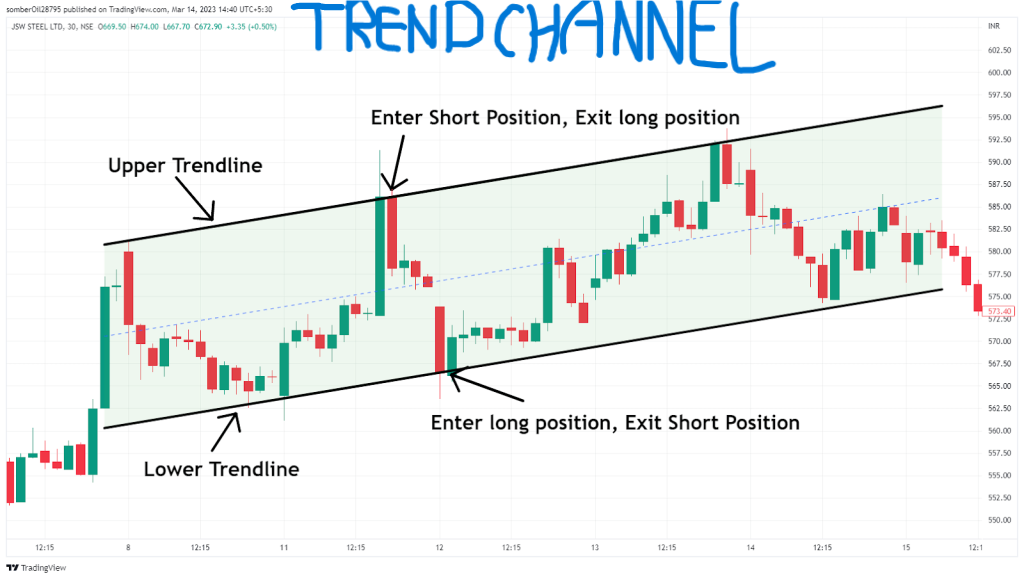
- • Trend Channels: Parallel boundary lines framing dynamic ascents or descents with clear boundaries.
- • Support & Resistance Zones: Key horizontal price levels where buyer and seller equilibrium pivots.
- • Confluence: Combining trendline slopes with horizontal zones and candlestick trigger confirmation.
Volatility Cycle
Markets alternate between low volatility compression and explosive expansion. Best to position during low-volatility squeezes ahead of breakout expansion.
Average True Range (ATR)
Measures historical daily volatility in rupee/point terms. Indispensable tool for calculating dynamic stop-loss distances and position sizing.
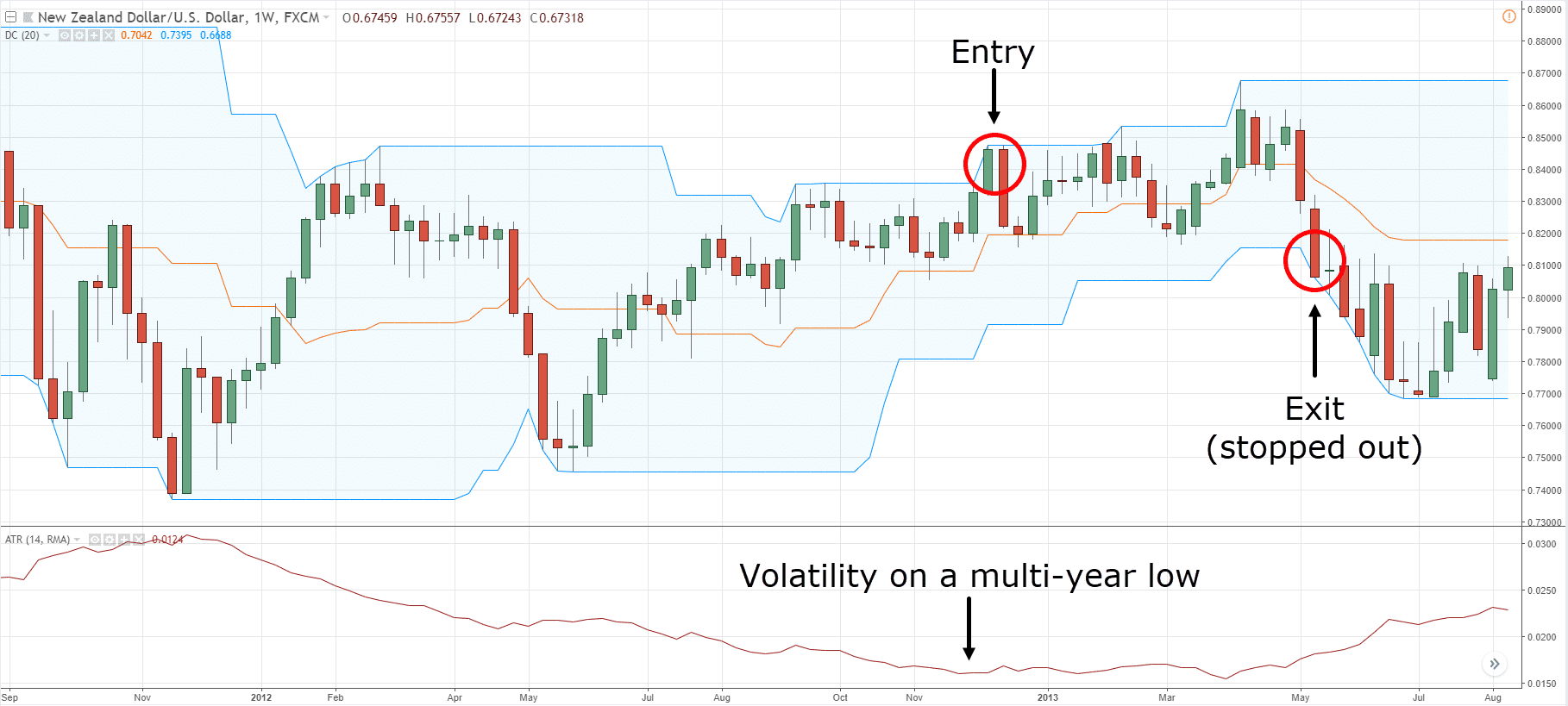
Donchian Channels
Displays highest 20-day high and lowest 20-day low bands. Trend breakouts occur when candles cross outside channel bands under rising volume.
Moving Averages (EMA / SMA)
Smooths historical price data to establish primary trend direction (20 EMA for short-term swing, 200 SMA for macro institutional trend).
Practical Indicator Combinations & Confluence Visuals
Never use indicators in isolation. Combine volatility channels and moving averages with raw candlestick trigger confirmations.
Donchian Channel + ATR
Enter when price breaks outside the 20-period Donchian band during low ATR volatility squeeze. Exit when price touches the opposing band.
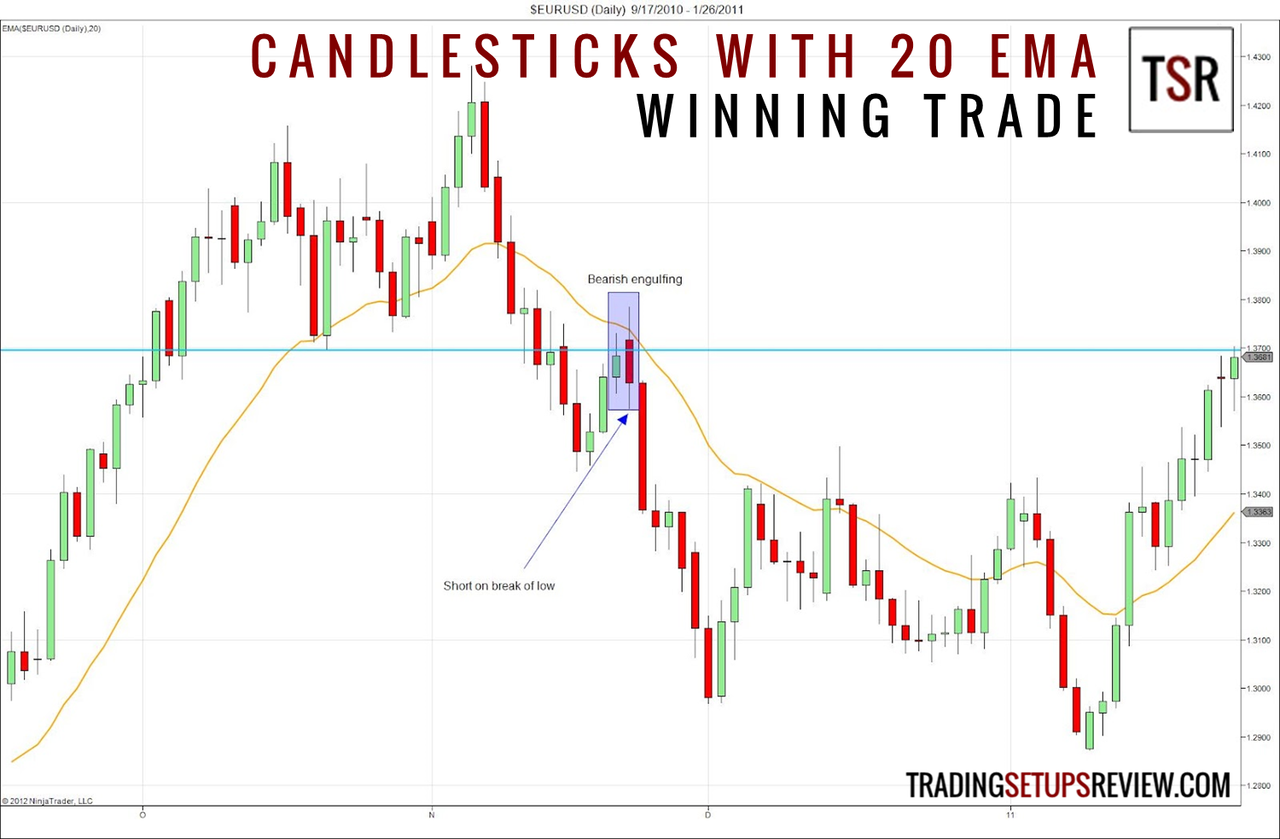
Moving Average + Candlestick
Define the dominant trend and dynamic area of value using 20/50 EMA, then wait for Bullish Hammer or Engulfing candle confirmation to trigger entry.
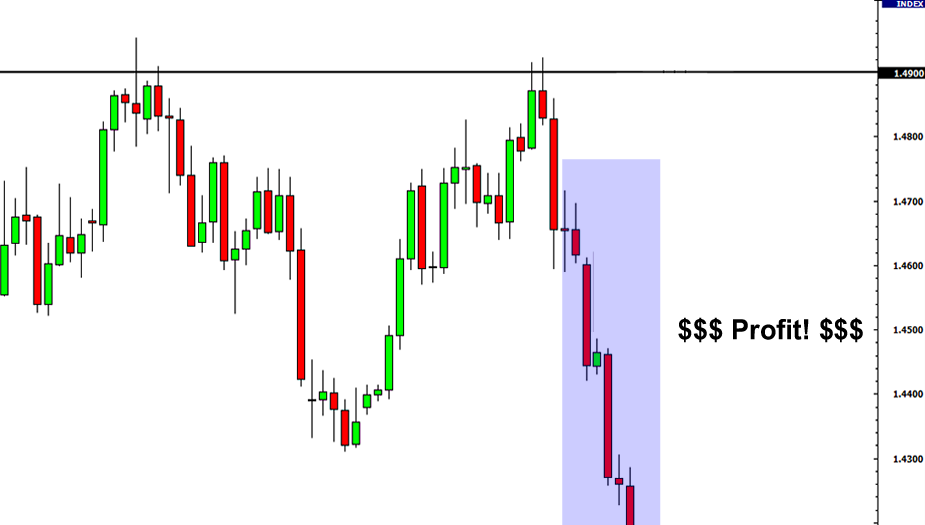
Resistance + Candlestick
Locate an established horizontal ceiling or supply zone, then execute a short or exit long upon printing a Tweezer Top, Shooting Star, or Bearish Engulfing.
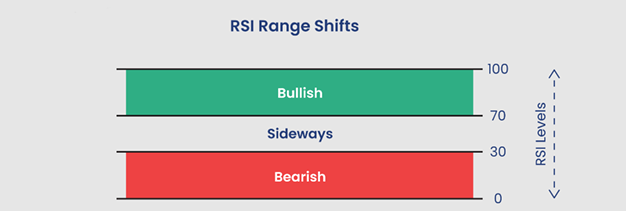
Relative Strength Index (RSI 14)
Identifies overbought (>70) and oversold (<30) momentum levels. Spotting bullish or bearish divergence with price provides early reversal warnings.
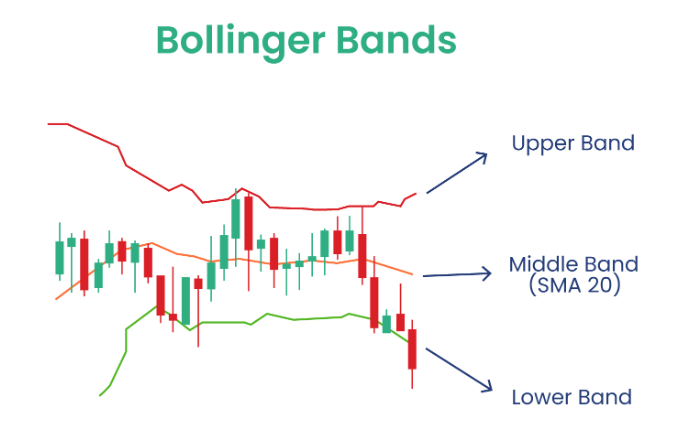
Bollinger Bands (20, 2σ)
Calculates 2 standard deviations around a 20-period SMA. Extreme volatility contraction ("The Squeeze") routinely precedes explosive trend expansions.
Technical Analysis vs. Pure Price Action
Why professional traders transition away from indicator clutter to raw price reading
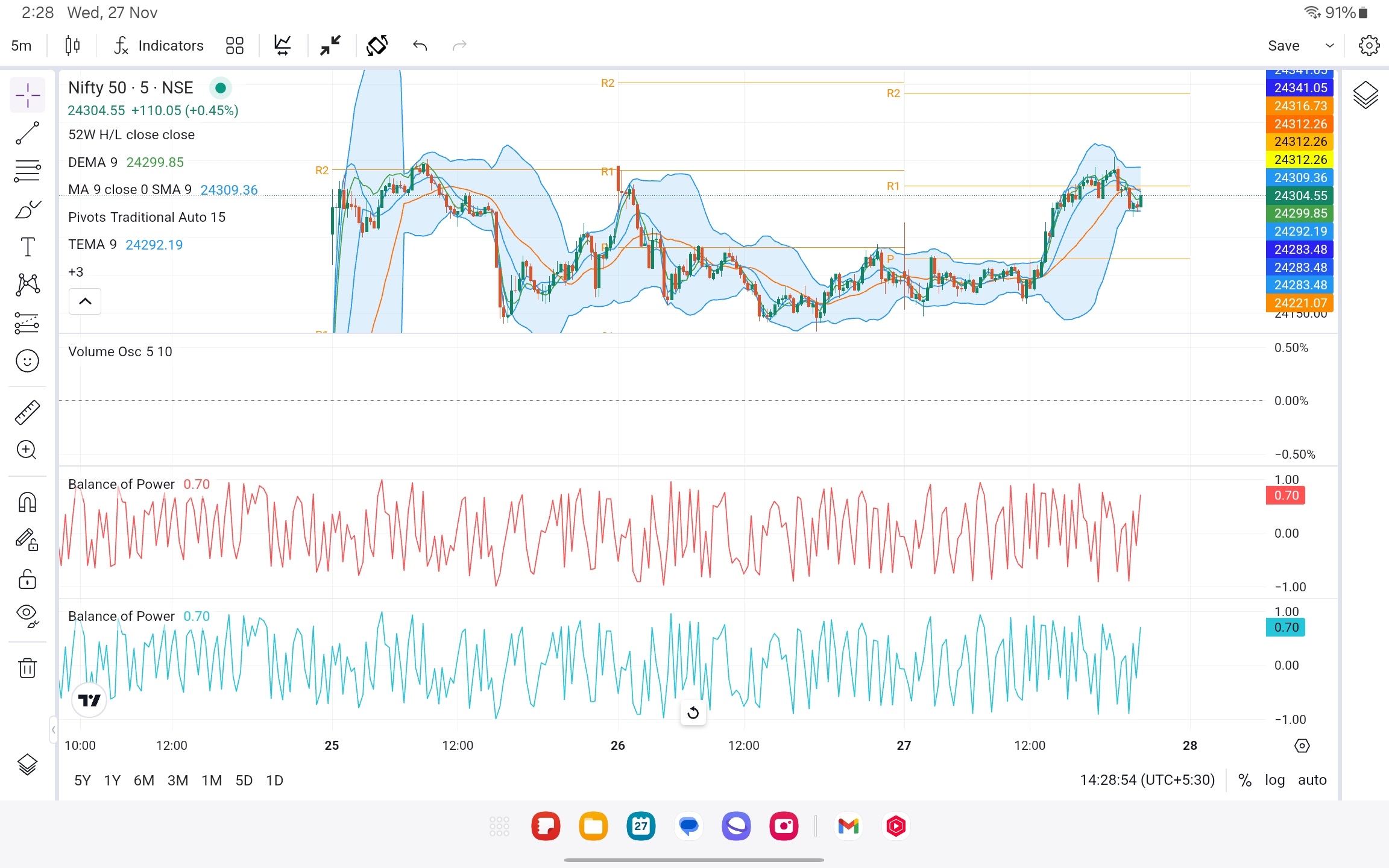
The Problem with Indicator Overload (Noise)
- • Lagging Nature: Indicators calculate formulas based on historical bars, delaying entry signals.
- • Conflicting Signals: One indicator shows oversold while another shows bearish trend, causing paralysis.
- • Visual Clutter: Occludes the fundamental reality of buyer and seller order-flow interaction.
The Superiority of Raw Price Action
- • Real-Time Fidelity: Price is the direct, unmanipulated manifestation of market orders.
- • High-Precision R:R: Entries can be timed at exact support/resistance invalidation boundaries.
- • Simplicity & Discipline: A clean chart allows instant recognition of supply-demand imbalances.
Essential Price Action Strategies
Each strategy accompanied by dedicated research diagrams, trigger rules, and invalidation criteria
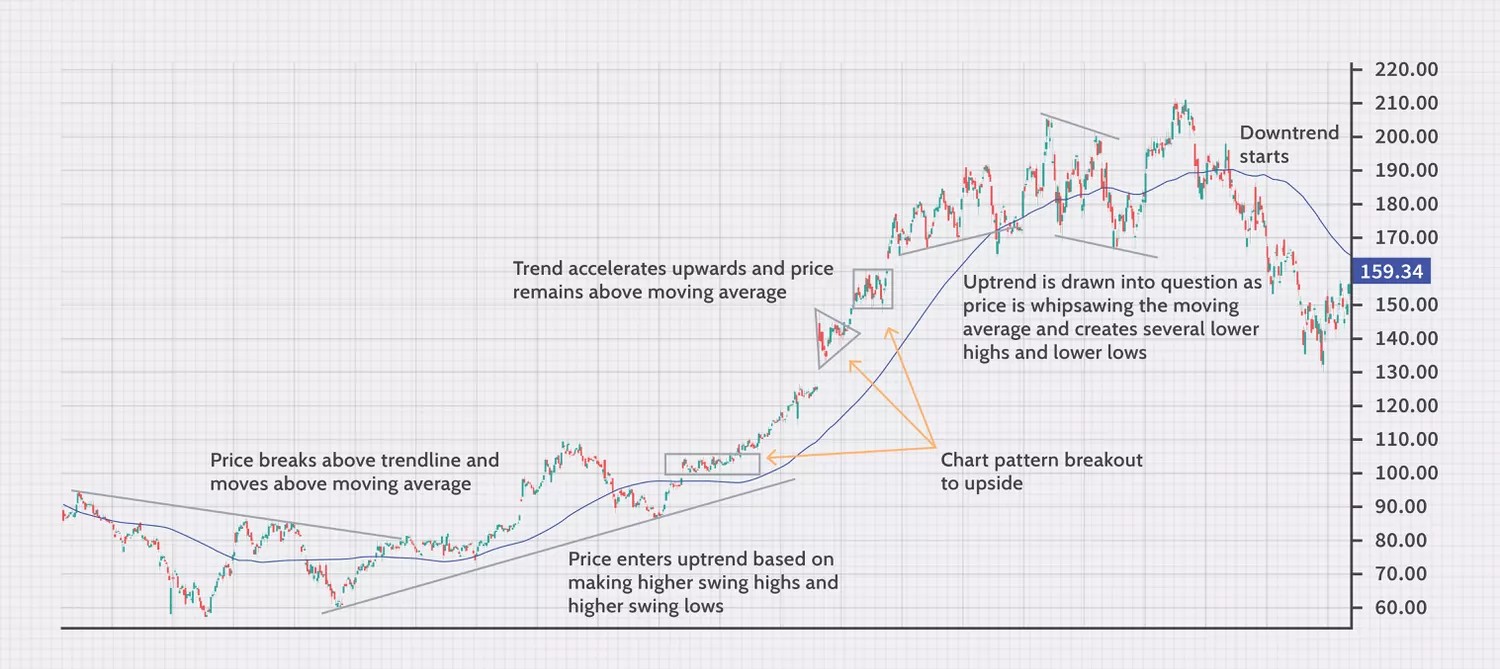
Trend Trading Strategy
Always trade in alignment with the dominant higher-timeframe trend. In a bull market with Higher Highs (HH) and Higher Lows (HL), only look for long pullback entries when price tests the trendline or support zone with bullish candle confirmation.
Trigger: Breakout or pullback bounce with volume confirmation
Stop Loss: 1-2 ticks below the most recent swing low
Target: Previous swing high or next structural resistance level
Inside Bar Compression Strategy
An Inside Bar is a candle whose range (high to low) is completely contained within the preceding mother candle. It reflects market hesitation and volatility compression. A break above mother bar high signals continuation; a break below triggers liquidation.
Bullish Entry: Buy stop placed 1 tick above Mother Bar high
Stop Loss: Placed 1 tick below Mother Bar low
Advantage: Tight stop-loss enables 1:3 to 1:5 Risk-to-Reward
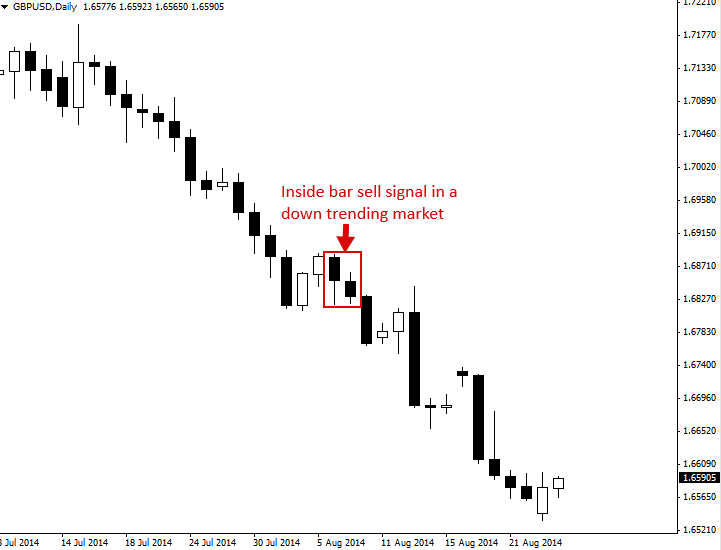 Setup 1: Mother Bar Enclosure
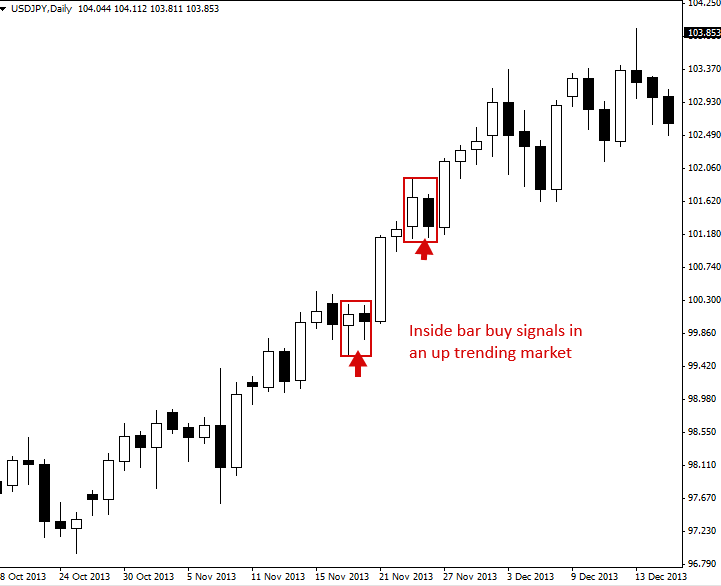 Setup 2: Breakout Execution
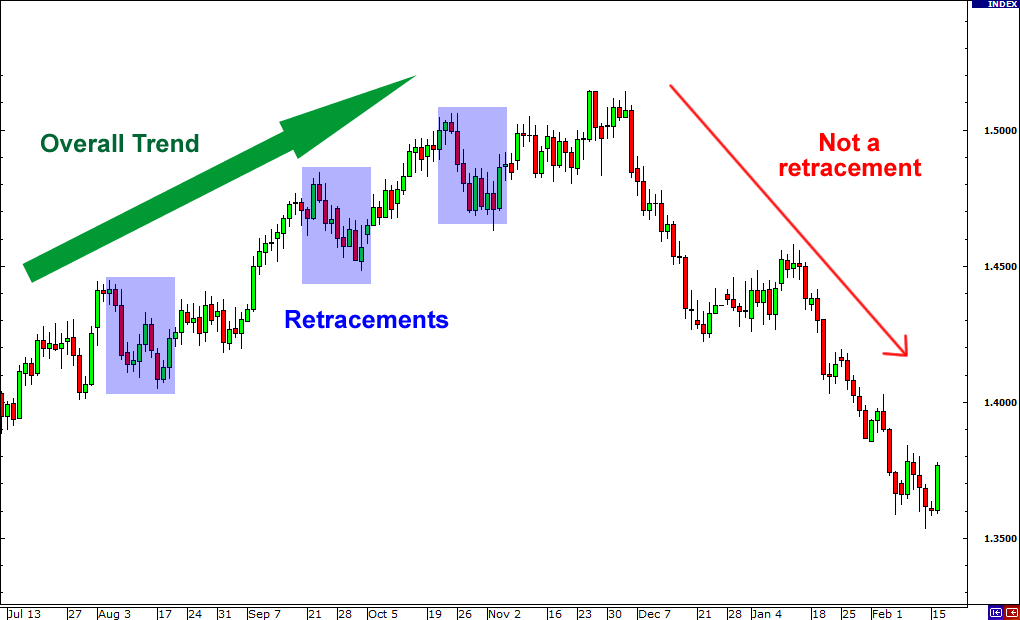
Retracement Trading
Markets do not move in straight lines. After impulsive expansions, profit-taking creates short-term pullbacks (retracements). Disciplined traders do not chase breakouts at expensive highs; they wait for retracements to prior broken resistance (now support) to buy at institutional discount.
Golden Rule: Buy at support during uptrend; never short into support
Fibonacci Levels: 50% and 61.8% golden ratios provide maximum confluence
Reversal Pattern Recognition
Reversal patterns signify that the current momentum is drying up and opposing order flow is absorbing resting orders. Double Tops, Double Bottoms, and Head & Shoulders require neckline breaks with surge volume to validate genuine trend shifts.
Confirmation: Wait for candle close across the pattern neckline
Hazard: Never anticipate reversals prematurely without structural confirmation

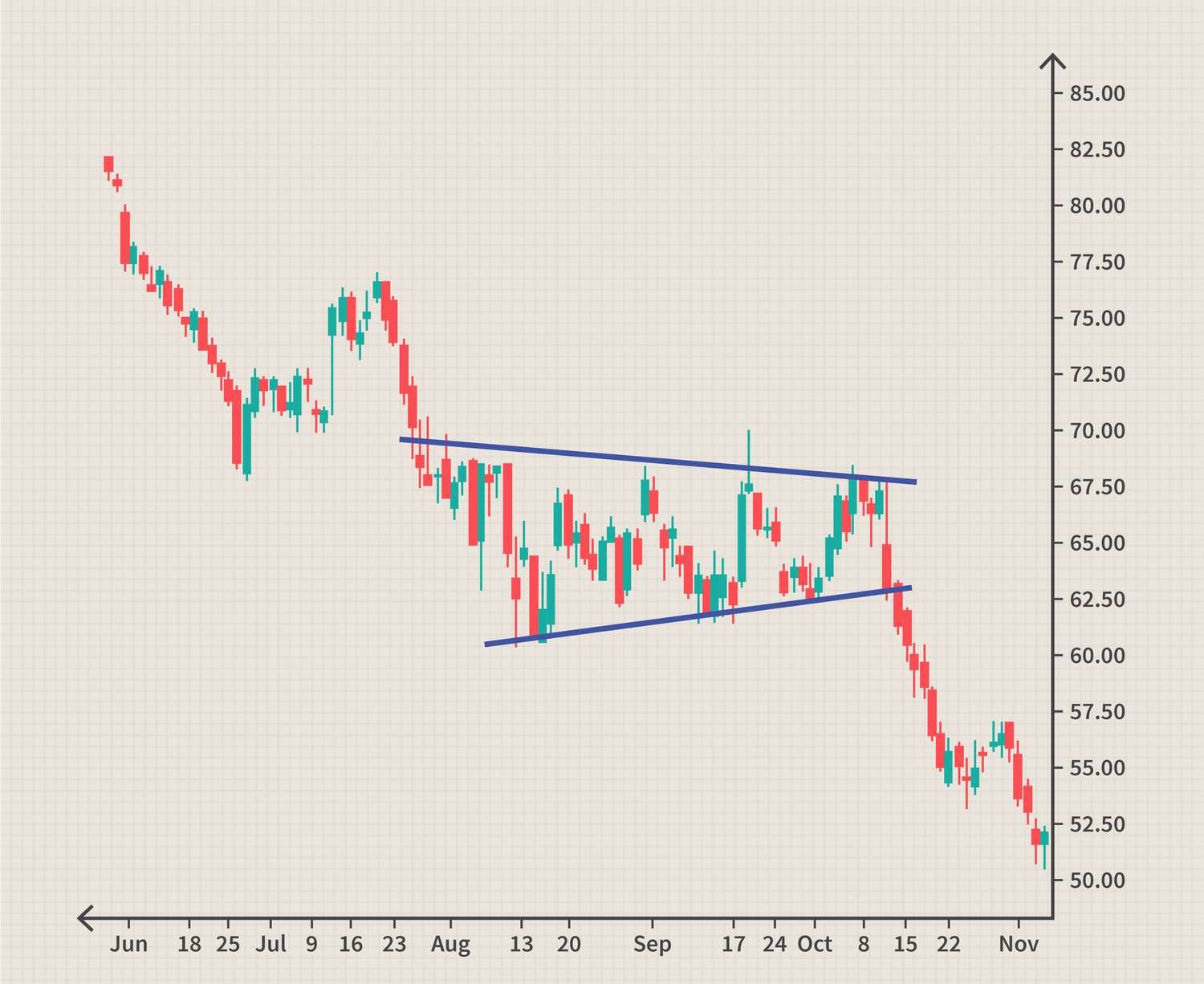
Breakouts & Breakdowns
Breakout: Price expands above a key horizontal resistance level with high institutional volume, marking the initiation of an aggressive markup phase.
Breakdown: Price violates an established support floor, triggering cascading stops and inaugurating a markdown distribution cycle.
• High Volume = True Breakout Institutional Conviction
• Low Volume = Trap Hazard (False breakout / Spring)
 Breakout Over Resistance
 Breakdown Below Support
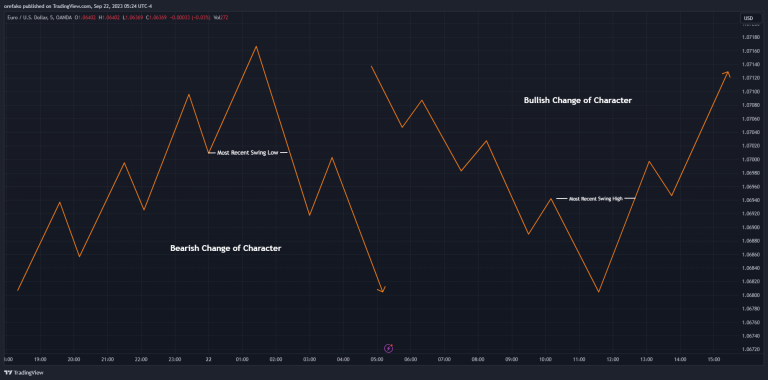
Change of Character (ChoCh)
A Change of Character is the earliest signal that the existing market trend is losing order flow dominance. In an uptrend, ChoCh occurs when price violates the most recent Higher Low (HL). In a downtrend, ChoCh occurs when price blasts through the most recent Lower High (LH).
Action: Immediately exit positions aligned with the prior trend
Wait: Look for the first structural retest to enter new directional bias
Market Structure Fundamentals
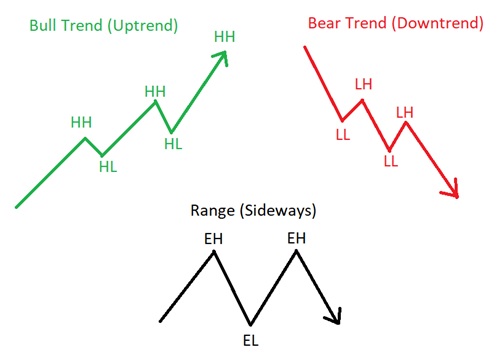
Market structure maps the topography of price action. By tracking Higher Highs (HH) and Higher Lows (HL) in bull markets, and Lower Highs (LH) and Lower Lows (LL) in bear markets, traders always know who controls the auction.
Bullish Structure: Higher Highs (HH) + Higher Lows (HL)
Bearish Structure: Lower Highs (LH) + Lower Lows (LL)
Ranging Structure: Equal Highs (EQH) + Equal Lows (EQL)
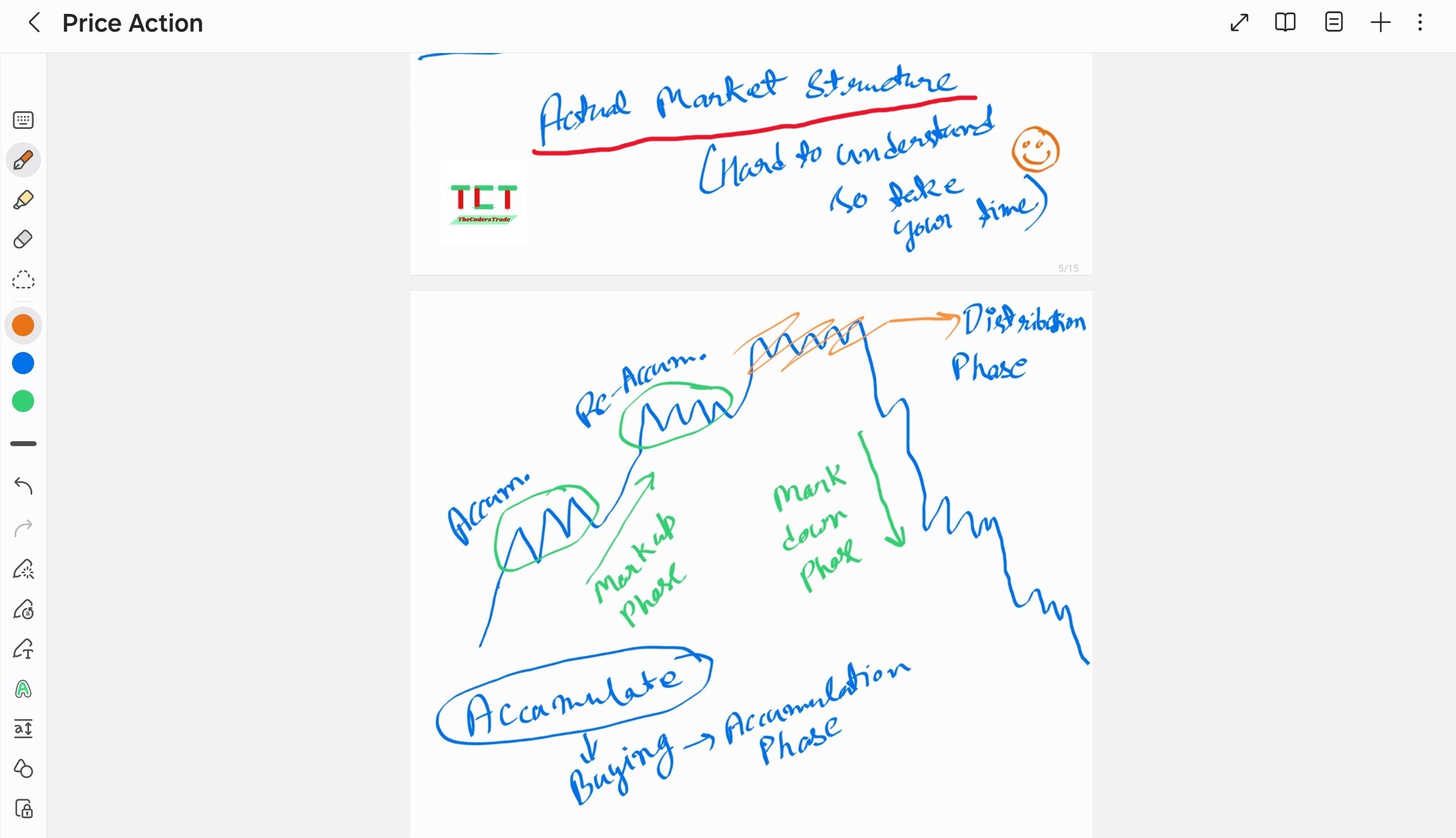
Actual Market Structure & Institutional Phases
Understanding the continuous lifecycle: Accumulation → Markup → Distribution → Markdown
1. Accumulation Phase
Smart money absorbs shares silently within a tight horizontal range without letting price escape.
2. Markup Phase (Advancing)
Aggressive breakout followed by sustained uptrend slope. Pullbacks to previous resistance offer throwbacks.
3. Distribution Phase
Smart money distributes inventory to euphoric retail buyers near structural cycle peaks.
4. Markdown Phase (Declining)
Supply overwhelms bids. Aggressive price drop creates lower highs and lower lows until next accumulation.
Real-World Market Structure Case Studies
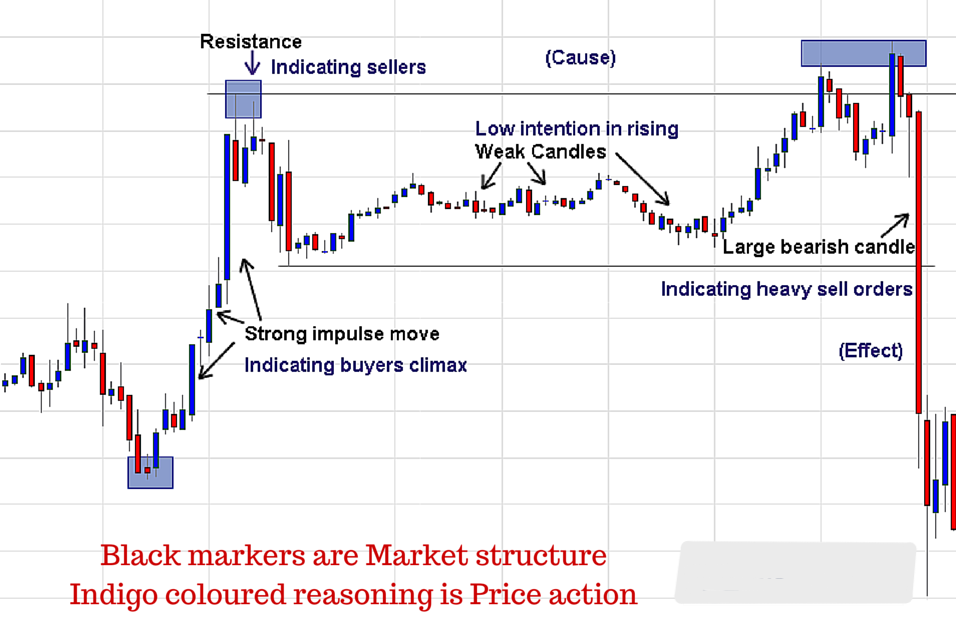 Example 1: Break of Structure in Expansion
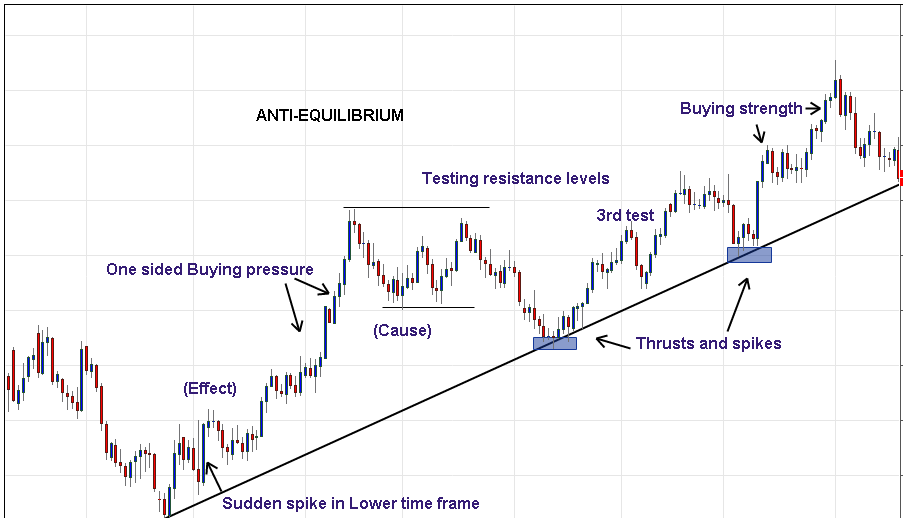 Example 2: Consolidation & Throwback Support
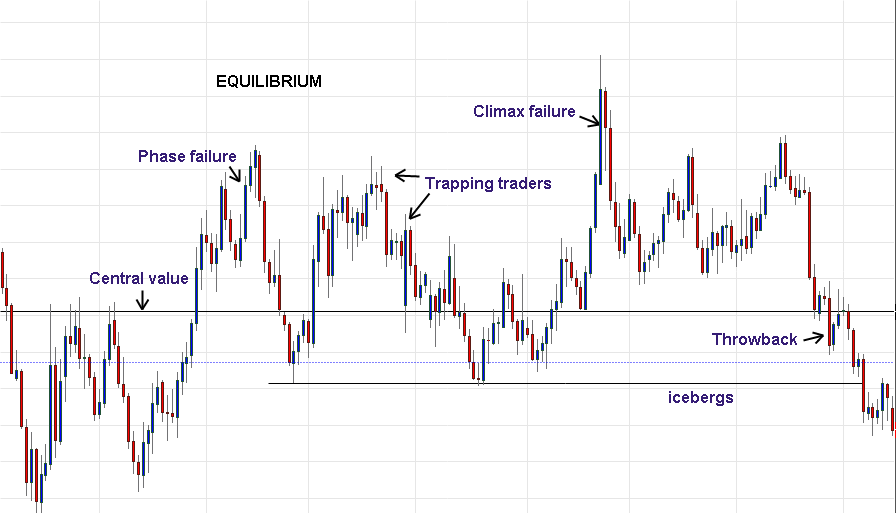 Example 3: Structural Shift & Markdown Transition
Price Action: The Sovereign Core & Volume Expectations
Understanding volume confirmation, supply-demand equations, and institutional footprints
The Demand & Supply Equation
Price action is the raw reflection of buyers and sellers interacting. When aggressive market orders exceed resting limit orders, price moves. Indicators merely summarize past price action; pure price action is real-time.
• Demand > Supply = Price Expands Upward (Bullish)
• Supply > Demand = Price Drops Downward (Bearish)
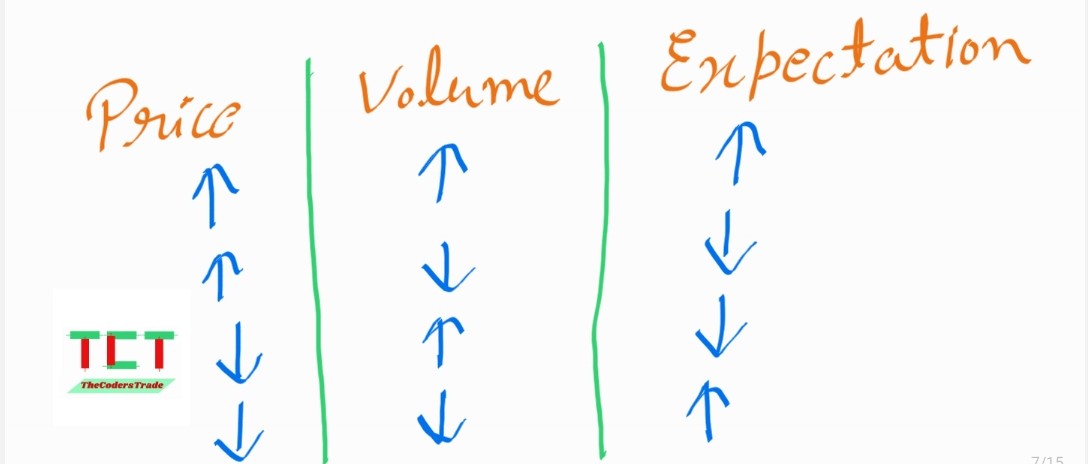
• Rising Price + Rising Volume = Healthy Strong Uptrend
• Rising Price + Falling Volume = Exhaustion / Divergence
• Falling Price + Rising Volume = Aggressive Institutional Selling